Your Cart

Guide
How to Dispose of Compostable PPE
Compostable PPE should be collected separately from general waste and processed through industrial composting, on-site biodigestion, or municipal organic waste collection—never mixed with regular recycling or sent to landfill.
Last reviewed: March 2026
Key Takeaway
Compostable PPE should be collected separately from general waste and processed through industrial composting, on-site biodigestion, or municipal organic waste collection—never mixed with regular recycling or sent to landfill.
DMO
Dr. Mary O'Riordan·Medical doctor specialising in infectious disease control
Step 1: Set Up Separate Collection
Establish dedicated collection bins for compostable PPE, clearly labelled and colour-coded (green is standard for organic waste). Position bins at PPE disposal points throughout your facility. Train staff on the difference between compostable and regular PPE.
Step 2: Check for Contamination
Compostable PPE contaminated with bodily fluids may require different handling depending on local regulations. In most cases, contaminated items can still be processed through high-temperature biodigestion. Consult your waste management provider for guidance on clinical waste classification.
Step 3: Choose Your Processing Method
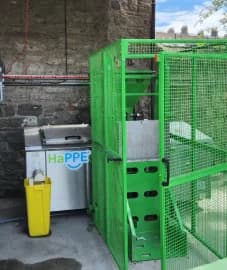
Three main options exist: 1) Industrial composting facility collection, 2) On-site biodigestion using a HaPPE biodigester, or 3) Municipal organic waste collection where available. On-site biodigestion offers the fastest processing (24 hours) and eliminates transport emissions.
Step 4: Track and Report
Record volumes of compostable PPE diverted from landfill for ESG reporting. If using a biodigester, the integrated monitoring system automatically tracks inputs and outputs. This data supports CSRD and ESRS-E5 compliance reporting.
Frequently Asked Questions
No. Compostable plastics can contaminate recycling streams. They must be processed through composting or biodigestion, not recycling.
In landfill conditions (low oxygen), compostable materials break down much slower and may produce methane. Always divert to proper composting or biodigestion.
Related Products

EN 13432ASTM D6400
Compostable Splash Apron
Get QuoteCertified compostable bio-resin apron with a fluid-resistant barrier for clinical use
Fluid-resistant barrier that maintains clinical safety standardsTested for impact and tear resistance to BS EN ISO methodsBreathable, non-slip material for extended wear
Made in Ireland
CE Marked
HaPPE Bio-Digestor
Get QuoteOn-site digestor with plasma decontamination that turns PPE and waste into pathogen-free fertiliser in 24 hours
Plasma decontamination produces pathogen-free outputPPE, food waste and paper to fertiliser in 24 hours75-80% volume reduction
Made in Ireland
Need help with disposal?
Our team can help you set up the right waste processing solution for your facility.